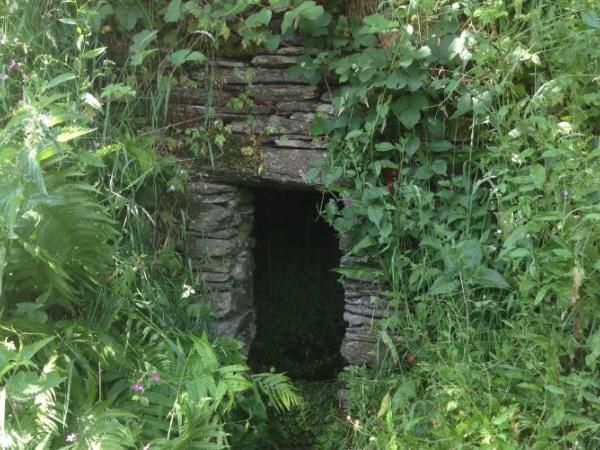
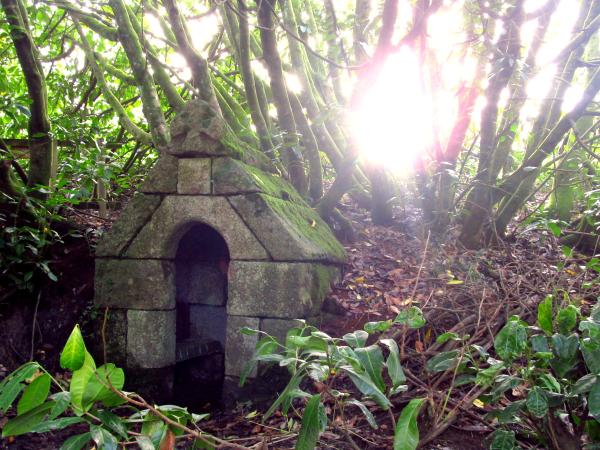
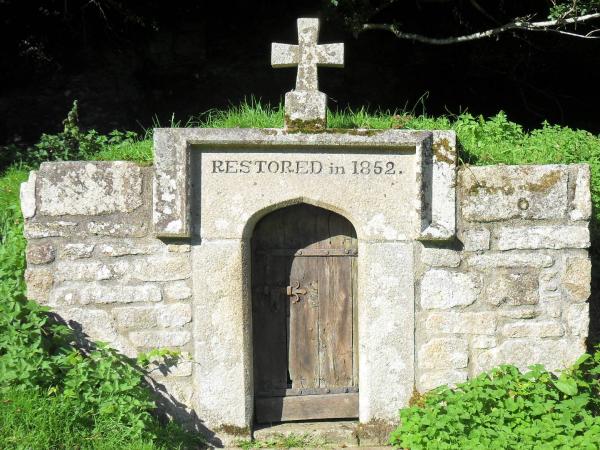
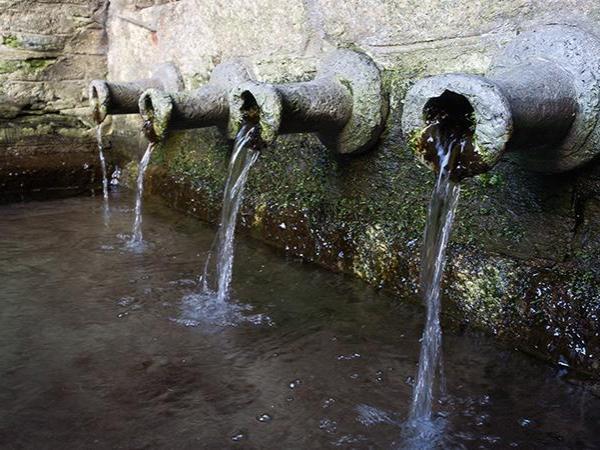
The holy wells of Cornwall are found nestled into hedgerows and fields, by the sides of lanes and hidden away beneath trees. Their waters are thought to hold medicinal or purifying qualities and were once the haunts of piskeys.
Cornwall’s springs have been visited by communities for centuries, they were important sacred places for pagan worship.
In the fifth and sixth centuries the saints journeyed to Cornwall from Wales and Ireland to teach the people about Christianity. These missionary saints recognised the purifying and healing qualities of the ancient wells and chose to dwell by them and rename the wells after themselves. The Christians rebranded the sacred springs as Holy Wells, and in Victorian times stone structures were built over the springs which are still in place today.
In the Looe Valley can be found three wells; the Well of Saint Keyne, Saint Cuby’s Well and Saint Nona’s Well. Saint Keyne lived and prayed by her well beneath three entwining trees. Before her death, she blessed the well, saying the first partner of a newly married couple to drink from the well would be master of the marriage. Saint Cuby, son of King Solomon found a spring on his travels and prayed there for forty days, in which time he carved a font with a griffin, now found in Duloe church. . Saint Nona’s Well of Pelynt is also known as the Piskey Well and still bows and trinkets are tied to the tree beneath which the spring swells and left in the well walls for the
In Liskeard is the Pipewell, a healing spring which gives the gift of a happy marriage, Saint Cleer’s Well waters are thought to cure madness, Redruth Well is a spring with the gift of blessing children, at Chapel Euny Well where if children are dipped in the well waters in the month of May, they will be cured of ill and their wounds healed. In Figgy Dowdy’s Well on Good Friday, the children dip their dolls and in St John’s Well, Morwenstow, Hawker used the well water for baptisms as it was found to be especially pure.
The wells, whether blessed by a saint of not, are thought to be pure and often healing waters which can sprinkle a little hope into the community. Special places to go to think or pray for a moment and perhaps then thank the piskey or saint for the healing time spent beside the well.